Nelson Institute Talks
The Nelson Institute hosts an engaging programme of talks on local history, heritage, science, the environment, and community topics. All are welcome — come along, learn something new, and meet others who share your interests.
Upcoming Talks
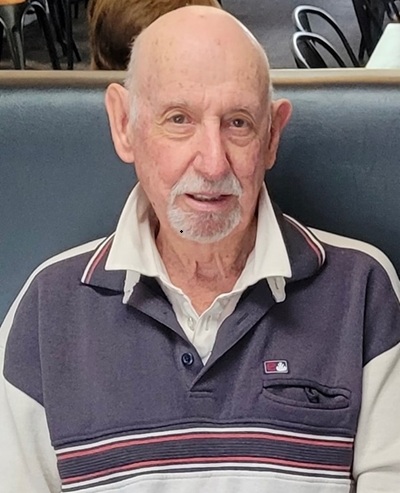
Amandla ’76, the Soweto Uprising Revisited
2PM, Sunday, 1st November at the Elma Turner Library Activities Room. Cost: $5 or direct credit to 03-1354-0183881-00.
Teaching in Soweto and the June 1976 Uprising – Warwick’s book is a personal account firstly, of the conditions, educational opportunities (or lack thereof) and his experiences as a teacher at the only African Teacher Training College in Soweto and secondly, of the horrific events he witnessed as the 16 June 1976 Soweto Uprising unfolded and how it impacted on him, his wife, his students, and his teaching colleagues.
Nelson born and bred, Warwick Johnston has had a diverse career as a teacher in New Zealand and Overseas, as a tutor in the Education Faculty at Victoria University of Wellington, and as an historian. He is the author of a number of local histories chronicling early settler history. They include Port Nicholson’s First Town, History of the Petone Foreshore, and The Life of Jackson Street. Similar historical endeavours include family histories and industrial heritage assignments. As well, he has worked with local and central government agencies focussing on heritage/historical resource identification projects and analysis. He now lives with his wife, Jane, in Richmond, where he continues his interest in local history and genealogy.
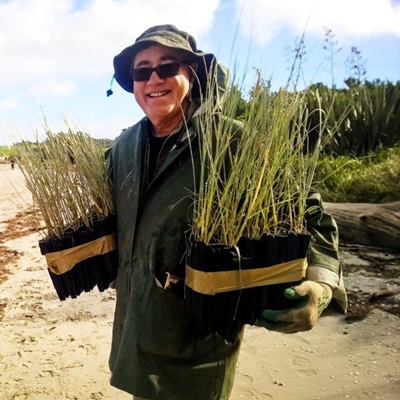
Plant Fiend
2PM, Sunday, 6th December at the Trafalgar Park Pavilion Cost: $5 or direct credit to 03-1354-0183881-00.
In Plant Fiend, Peter chronicles his lifelong love affair with plants. Daring to be different, he has always done life on his terms. A classroom maverick, restless intellectual, pioneering horticulturist, and conservationist, he has always pushed the boundaries. The result has been huge successes and spectacular failures, both in business and life.
This story describes going off-grid in Golden Bay’s Aorere Valley in the 1970s, goldmining and growing experimental commercial crops which included an ill-fated cannabis growing enterprise. While in prison he researched the medicinal properties of NZ native plants, especially horopito. He went on to establish our first horopito plantation, building a thriving global business around its anti-fungal properties, developing an online retail business HealthPost, which he runs with his family. This business success led to conservation efforts on a large scale. This is the driving force behind creating biodiversity and predator-free nesting sites at Farewell Spit.
Peter grew up in Timaru and studied Political Science and History at the University of Canterbury before moving to a remote forest in Nelson’s Golden Bay. There, he threw himself into entrepreneurial activities, not all of which were successful. However, his relentless determination paid off with the creation of highly regarded natural health companies Forest Herbs Research and HealthPost. Beyond horticultural and business activities, he has produced a feature documentary and written four books. He is now passionately engaged in improving the biodiversity of the Wharariki Farewell Spit area as Chair of HealthPost Nature Trust.
Previous Talks
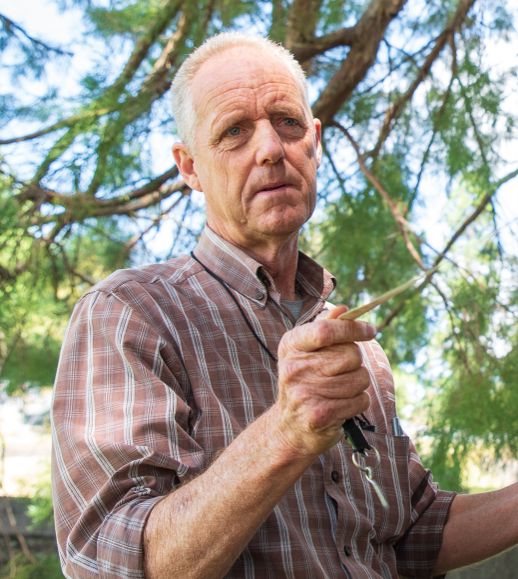
Great Trees of New Zealand- From Nelson to the Nation. Exploring the New Zealand Tree Register.
2PM, Sunday, 4th October at the Elma Turner Library Activities Room. Cost: $5 or direct credit to 03-1354-0183881-00.
New Zealand has an exceptional tree heritage, from ancient native giants to enviable collection of exotic trees. This presentation explores how our remarkable trees have been recorded over the past 150 years, culminating in the establishment of the NZ Notable Trees Trust and the launch of the New Zealand Tree Register in 2009.
Brad will take a practical look at the Register and how anyone can use it to discover, research and record significant trees. He’ll demonstrate how trees are submitted and measured, how records can be searched and mapped, and how photographs and historical information help tell the stories behind them.
Along the way we’ll meet some of New Zealand’s champion trees, including specimens of international significance, and take a closer look at some notable trees closer to home — from the Greenwood and Seymour oaks, Bishopdale kahikatea to the impressive London plane avenue at Tōtaranui. More than simply a database of big trees, the Register is a growing record of NZ’s living tree heritage and the stories that connect people, places and trees.
Brad has been working with trees since 1978, when he began practising arboriculture in Auckland. After studying Amenity Horticulture at Massey University and gaining further arboricultural experience in Canada, he returned to New Zealand and settled in Nelson in 1991, where he established a tree contracting business before moving into independent tree consultancy.
Brad is a past President of the New Zealand Arboricultural Association, a former Board member of the International Society of Arboriculture, and a Foundation Trustee of the NZ Notable Trees Trust. He has managed the Trust’s National Tree Register since its launch in 2009.
These days Brad’s professional life centres on mature and heritage trees, while his spare time is often spent reading about them, talking about them, or heading off to find and measure another one. He has a particular weakness for trees that are older than he is.
Preview Brad’s talk by listening to this interview: South Island stories: The trees we love and vote for | RNZ
Is Whakatu Nelson a Centre of Cultural and Artistic Enlightment in 2026?
2PM, Sunday, 6th September at the Elma Turner Library Activities Room. Cost: $5 or direct credit to 03-1354-0183881-00.
From Charles Heaphy VC to the World of Wearables and Jens Hansen Goldsmiths Nelson can be regarded as a prominent regional centre of arts and crafts activity in NZ. But that’s just the start of this story. Anne builds on this illustrious history to tell new stories of immigration, past and contemporary, with some surprising options for the future, including the revival of traditional civic philanthropy. A concept very familiar to our Victorian ancestors.
Anne is a well-respected Nelson-based visual artist, who has worked across a wide range of arts and cultural development projects. Apart from creating her own exhibitions at commercial and regional galleries, Anne was researcher and project manager of the benchmark symposium, Destination New Zealand – Capturing the Cultural Tourist(1998). She has served on the APEC Prime Ministerial Advisory Group on Arts and Culture (1999), National Working Party on Cultural Tourism (2000), Queen Elizabeth II National Working Party on Community Arts (1993) and Queen Elizabeth II Central Regional Arts Council (1986-89). She held governance roles at Creative New Zealand Arts Council Toi Aotearoa and Creative New Zealand Arts Board Toi Aotearoa (2009-2014).
Regional projects include co-founding the Nelson Bays Arts Marketing Network (1993) and Nelson Regional Guidebook – Art in its Own Place (1994). As recipient of a Social Entrepreneur’s grant Anne developed a Cultural Mapping case study, Presenting Ourselves; Unlocking and Interpreting Cultural Landscapes Group. Anne was co-founder of one of Nelson’s most loved biennial events, Light Nelson/Te Ramaroa.
Since 2019 Anne has been the General Manager of Make/Shift Spaces Incorporated, a not-for-profit organisation that works with a whole range of artists, creatives, property owners, community and special interest groups to fill vacant spaces with vibrant installations and activity. We also use some of the spaces and city walls to tell stories about our community ( Nelson City ArtWalk) more recently utilising Mobile phone technology ( A Bridge too Far –Maungatapu Murders) utilising Mobile phone technology to tell our stories and navigate the city.
Make/Shift Spaces is part of a global movement to re-use, re-invigorate and re-present un-used spaces in our city’s places. It’s all about revitalising and exploring our city spaces.
Cultivating Resilience in a Hungry World
2PM, Sunday, 2nd August at the Elma Turner Library Activities Room. Cost: $5 or direct credit to 03-1354-0183881-00.
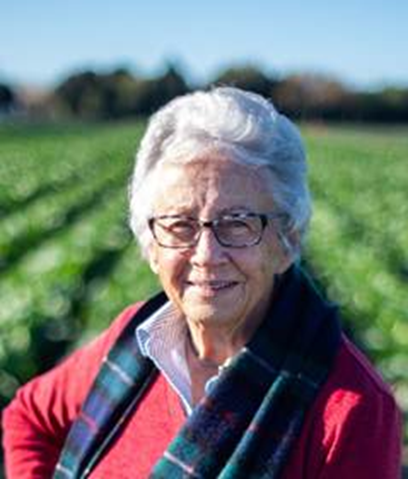
Retired rural sociologist Sandy Stephens will present an outline of her work for the rural poor in developing countries, analysing and designing measures to optimise the benefits of technical solutions to household food insecurity. Based on her work with United Nations Food and Agriculture experts in horticulture, irrigation and water management, agriculture, land tenure, forestry, fisheries, animal husbandry, soil science, plant genetics, pest control and farm technologies to name a few, Sandy will show how the early identification and analysis of the social consequences of technical and economic interventions can make the difference between overall success and failure.
Sandy Stephens grew up on an apple orchard ‘Woodstock’ in Stoke. After graduating she spent two years’ teaching at Waimea College in Nelson before serving two years as a VSA volunteer at the Fiji School of Medicine and four as a Colombo Plan adviser in Malaysia.
For the next 25 years Sandy worked as an international civil servant with the United Nations Food and Agriculture Organisation (FAO) in Africa, Asia and the South Pacific as well as at their headquarters in Rome. In her role as a rural sociologist she worked with FAO and Government technical experts to increase food security among some of the world’s poorest rural households.
Returning to New Zealand in 2000, she worked as a consultant rural sociologist for both multilateral and bilateral projects in Africa and Asia, while also serving on the boards of Oxfam Aotearoa NZ and Volunteer Service Abroad. She continues to use her experience to support a number of national and local charities and non-governmental organisations.
Educating for a Brighter Future
2PM, Sunday, 5 July at the Library Activities Room. Cost: $3 or direct credit to 03-1354-0183881-00.
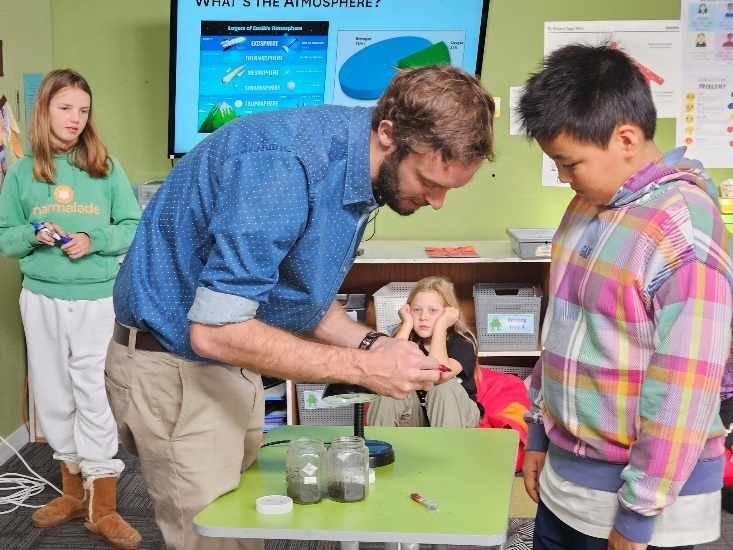
We owe it to young people and future generations to prepare them to live in a rapidly changing world, and to provide them with opportunities for their voices to be heard. Will shares the evolution of the Climate Change Learning Programme, including various experiences around hope, controversy, and bidirectional learning in the Anthropocene. He will share the various experiences Lighthouse Aotearoa has had, and how its members have influenced decision-making as they continue to strive toward equity as young constituents.
In 2024, after completing his PhD at the University of Otago in Dunedin, Will began facilitating a learning programme on climate change in Year 7&8 classrooms across Nelson and Tasman. The programme – which extends beyond the science of climate change to essential considerations such as critical thinking and worldview – began in Christchurch in 2021, and this was the first region to which it expanded. Over the past two years, Will has worked with 34 classes and over one-thousand students.
In addition to his work in schools, Will manages Lighthouse Aotearoa – an extracurricular youth organisation comprised of over thirty active members. Young people in this organisation are united by a strong passion for environmental preservation, and work to peacefully express their ideas and concerns in local government and community spaces.
Ultimately, this work has had an enduring impact on Will’s life, and has restored his excitement for the amazing feats of compassion and innovation of which humans are capable.
Living Well and Dying Well
3pm on Wednesday, 17 June 2026
Jaycee Room, Founders Park. Talk will be after AGM.
This is a discussion on the end of life, with messages about how to avoid family feuds, misunderstandings and general turmoil when the inevitable happens. Some medical, legal, and philosophical comment from someone who has seen sad and avoidable outcomes. It’s going to happen – making the best of it on your own terms – lots of suggestions!
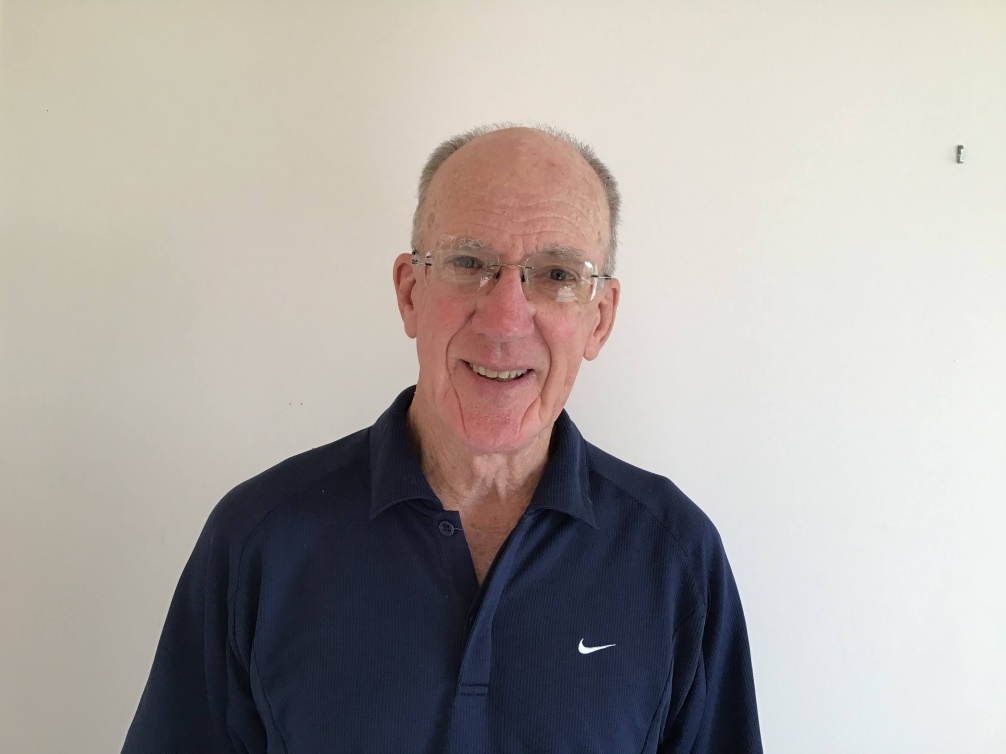
John is an Otago graduate who worked mainly as a GP in Te Anau as its’ first GP for 8 years, and then in Nelson for 20 years. He was a DHB member for twelve years and been involved with governance in many voluntary groups. He likes being very organized!
For further information contact Nelson Institute president Nigel Costley on 03 548 3101 or costleymarr@xtra.co.nz
Tales of Old Cawthron
2-3pm on Sunday, 7 June 2026
Activities Room, Nelson Public Library. Cost: $3, or pay by direct credit: 03-1354-0183881-00
Science can often take a very long time to come up with answers and the process can take unexpected twists and turns.
I present a couple of illustrations. In the first, a microscopic marine invader has BHP NZ Steel worried about bulk iron sand shipments to Japan.
The second describes how Cawthron’s research on these microorganisms, initially viewed as scaremongering, created a competitive advantage for NZ shellfish and eventually generated a massive revenue stream for Cawthron.
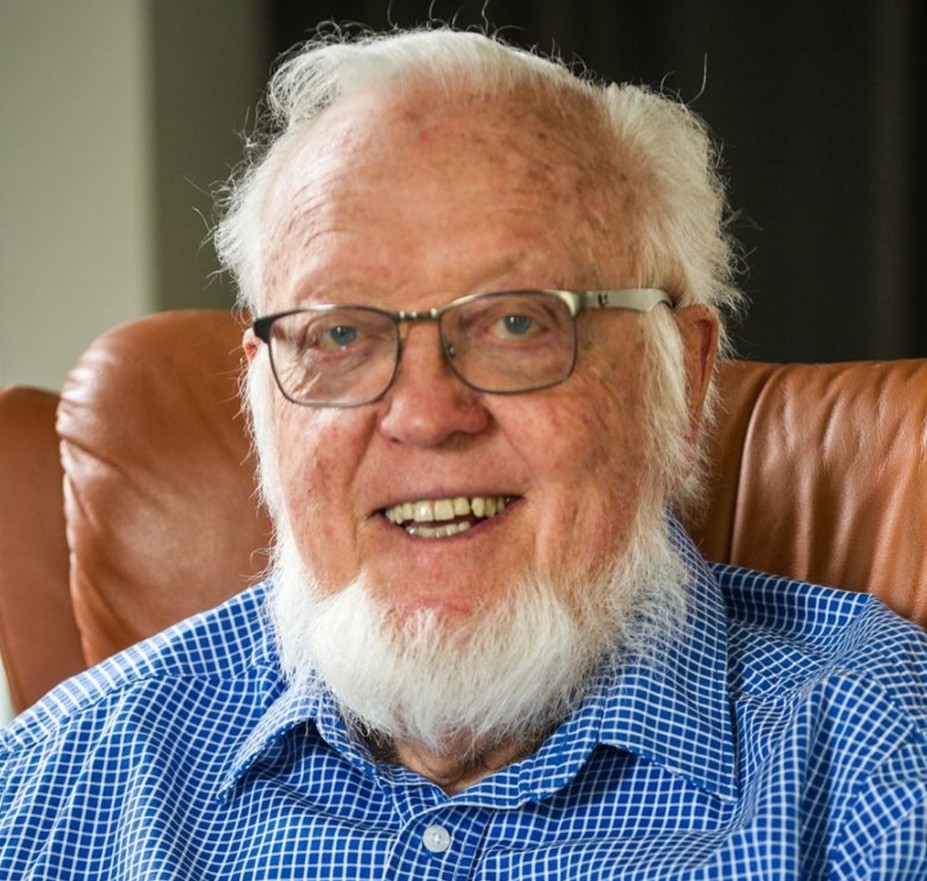
Graeme Robertson was brought up in Naenae, Lower Hutt and spent the first half of his career as a chemical engineer in the pulp and paper industry.
In 1988 he put much of his acquired technical knowledge aside, moving to Nelson as CEO of the Cawthron Institute. There he was tasked with rebuilding an organisation that had halved its size in the previous decade, down to 35 staff. 17 years later, with staff numbers exceeding 150, he moved to Lincoln University for a brief period before retiring in 2009.
Now he attempts to interest schoolchildren in STEM subjects, through Engineering NZ’s Wonder Project, ePro8 and the Stoke School Woodwork Club.
For the past six months he has been producing weekly podcasts for FreshFM based on his Cawthron experiences, “Nelson Science Stories”.
Sample some of these stories on: https://freshfm.co.nz/programme/nelson-science-stories/
Become a Member
Support the Institute’s events and activities throughout the year.